
PugJesus
History Major. Cripple. Vaguely Left-Wing. In pain and constantly irritable.
- 229 Posts
- 832 Comments
Joined 1 year ago
Cake day: March 24th, 2025
You are not logged in. If you use a Fediverse account that is able to follow users, you can follow this user.

Deus ex machina

I wouldn’t underestimate the ability of small churches to pander in shitty ways.

have you tried downloading more RAM
 7·4 days ago
In a just world, all the decision-makers involved in this fucking administration would hang.
 4·4 days ago
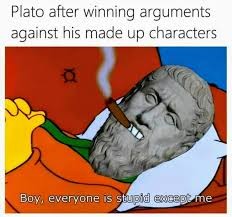
Explanation: Plato was a philosopher of Ancient Greece whose contributions to philosophy as a field are rightly highly valued. In disciplines, trailblazing is often more important than a refined finished product. “We stand on the shoulders of giants”, and all that.
Plato’s dialogues, some of which have survived to this day, include the well-known Republic, which is an insufferable masturbatory episode wherein Plato uses his mentor, Socrates, as a mouthpiece to argue with the most easily convinced and sycophantic men in all of Greece.
I still see red when I reflect on the time I wasted reading it.
The only way to make the question whether refugees are expected to “go home” a semantic issue is if your stance is if you believe that when someone runs away from genocide it is their free choice between becoming a refugee or becoming a migrant.
… that… that is literally the case.
Those who remain refugees are expressing a desire to return to their countries of origin. They are seeking refuge rather than permanent residency, and that’s what the entire fucking structure of asylum law is based around.
Those who are refugees but decide they would rather not return to their country of origin even once the danger has passed apply through their host country’s laws to become immigrants to that country.
Otherwise, you are expecting things from someone based on something that happened to them involuntarily,
… that’s… that’s all of life, man.
or based on the legal system of where-ever they were able to flee to for shelter,
… generally the expectation of legal systems is that the person in question will adhere to the laws, yes.
Perhaps I don’t. How has asylum law avoided being changed by neoliberalism and neoconservatism?
Asylum law wouldn’t exist at all if it was only a question of the interests of the rich. Refugees provide no benefit to the ultrawealthy or corporations, again, in civilized countries, precisely because they are not part of the labor pool, yet remain an expense which discourages the central government from cutting taxes further. On top of that, that refugees are a lawful and recognized position strips corporations of their ability to exploit them the way they would other classes of migrant - meaning that it is in the interests of the rich to see asylum law abolished entirely, not some bizarre notion that refugees being a protected class is somehow in the interests of the ultra-wealthy.
How many of the “civilized countries” you’re thinking of are materially contributing to the genocide of Palestinians? How many people have they killed or caused to die by violently enforcing standards of what they consider to be a proper refugee or a proper migrant, and manipulating those standards based on the needs of the rich?
… I’m not sure you understand asylum law.
Can you please think for yourself rather than referring to what is “generally considered” or what “civilized countries” do?
… this is literally a question of semantics and legal definitions. Unless you’ve decided to become some new kind of iconoclastic guerilla prescriptivist, both of those matters are pretty innately connected to the issue being discussed.
Or, alternatively, can you stop hiding behind popular opinion and say the quiet part out loud?
what
Refugees absolutely do not have to go “home” if they don’t want to. They should always have the right to, but it’s equally okay if they settle and build a new home that’s hopefully far away from people wanting to murder them for their ethnicity. They are people, not weapons with which to bring justice to those that attacked them.
The notion pushed by neoliberals that migration is temporary should be recognized as an excuse to ensure continued alienation between two different groups of workers and to make a large group of workers permanently at the mercy of corporations that hire them and states that have a mandate to fuck them over at a moment’s notice.
Refugees and immigrants are related, but generally considered separate, phenomena. Refugees, for this reason, are often restricted from being hired by corporations in civilized countries to avoid exactly that kind of exploitation.
Some refugees become immigrants. The reverse is not so.
It doesn’t shock me at all. I expect that these palestinian refugees are well aware they likely won’t be able to return and they factor that into their decision of whether or not to leave. Personally if I was in their place I’d be OK with that since Gaza’s government seems committed to endless war anyway.
Jesus fucking Christ.
Enjoy being a Holocaust support, Nazi.
This may shock you, but refugees are expected to return to their homes eventually.
Sorry that you feel that an occupying power murdering a tenth of a region’s population and then openly ‘encouraging’ others of a given ethnicity in the region to emigrate is normal, ordinary, everyday, non-genocidal behavior. I hope you get better.
Voluntary genocide. What a brave new world Israel is creating. /s
Gramercy, how archaic!
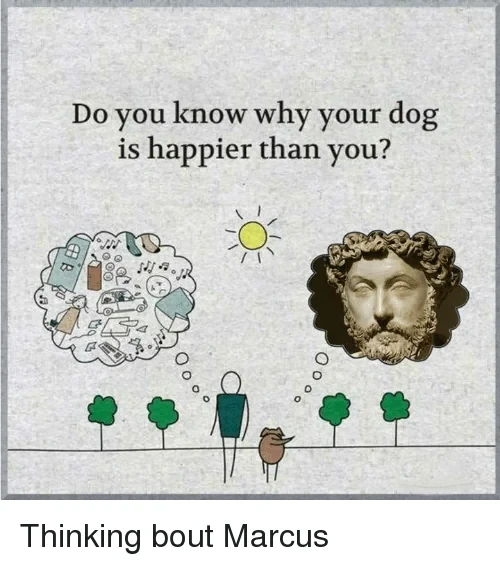
Explanation: Marcus Aurelius was a Roman Emperor who is noted for his philosophical musings, recorded in his personal notes, which were posthumously published as his Meditations. The title is a quote from the Meditations, emblematic of the philosophy of Stoicism that Aurelius espoused. To the Stoics, suffering came from within - by tormenting oneself over things one could not change, past, present, or future, one inflicted unhappiness upon oneself. The path to happiness, then, was to do what one could, and refuse to worry about what matters one could not change.
Stoicism and Cynicism were both related Greek philosophies of the period which stemmed from the same roots. While both philosophies held appeal to the Romans, Stoicism, which espoused reason and duty as the path to ataraxia (the state of non-suffering) and harmony, was generally more accepted in Roman culture than Cynicism. While Cynicism’s “Go with your gut, overthinking will lead you astray” thinking was also appealing to the Romans, the broader rejection of social norms was generally disdained by Roman culture. What’s next, acting like BARBARIANS!?
Cynicism, for that matter, comes from the Greek word for ‘dog’, after Diogenes of Sinope, a homeless philosopher who hung out with stray dogs and often compared himself to them, and influenced both Cynicism and Stoicism in seeking a natural, minimalistic order to life and happiness.
Both philosophies which espoused a view of the world as having an intrinsic harmony that could be discovered and adhered to for human happiness; thus, animals, while ‘brutish’, were often seen as themselves acting in accordance with this intrinsic harmony. A dog doesn’t worry about philosophical matters, after all!
 3·7 days ago
“Yes… good… let the civilization flow through you!” - Romans trying to assimilate G*rmanics
Just doing my best to make a little historical trivia humor accessible! 🙏
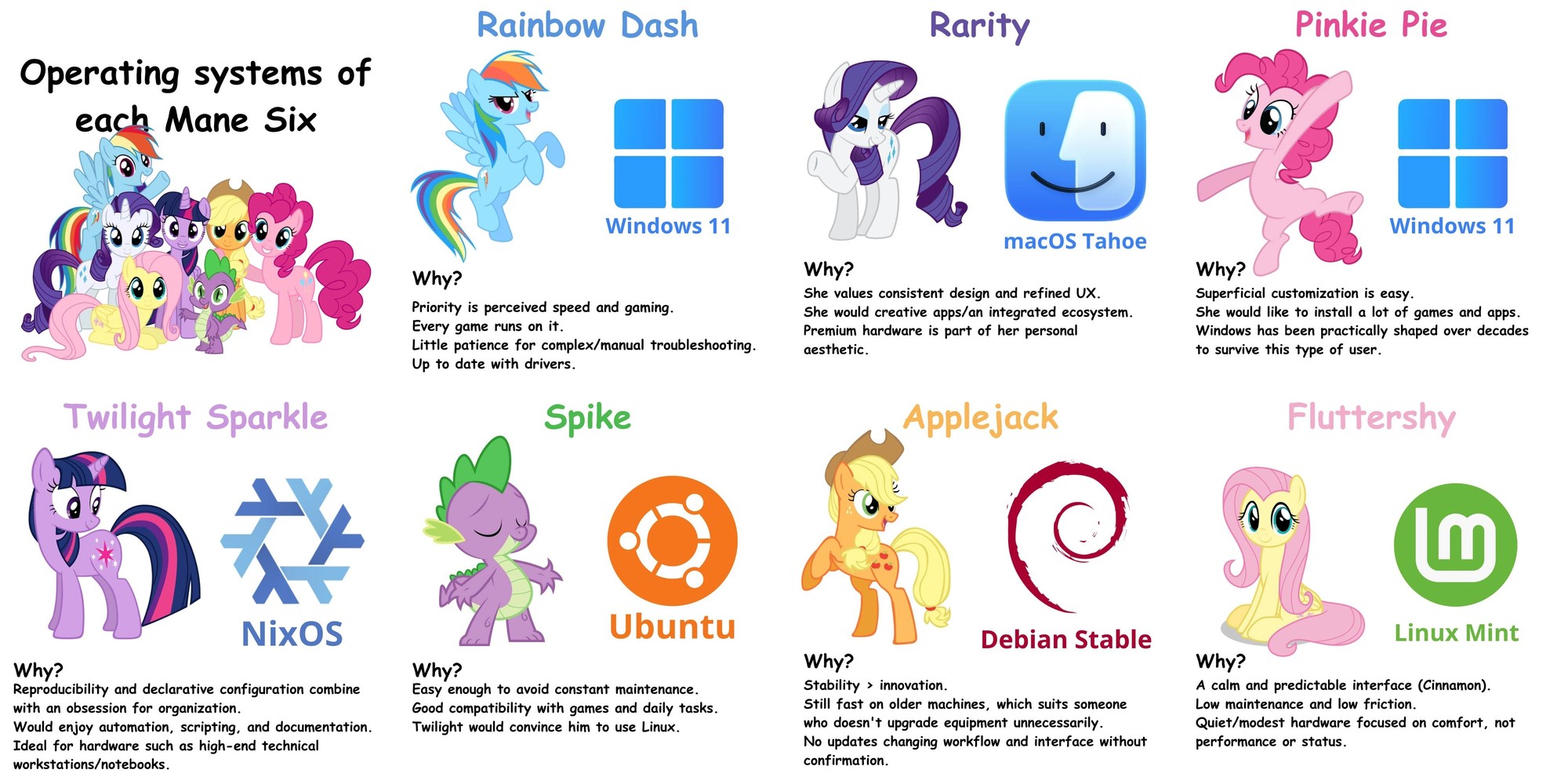
Tbf it does say perceived speed. Perception is shaped by marketing and bells and whistles regardless of reality, and all that jazz.

Explanation: Octavian, later known as Augustus, was the grand-nephew and adoptive son (posthumously, by will) of Julius Caesar, of conqueror and dictator fame. Caesar was, famously, assassinated by the Senate, including by many Senators he had pardoned during the civil war, despite them taking up arms against him.
When it became apparent that the assassins of Julius Caesar had little support amongst the people of the city of Rome, they fled to the east and tried to raise an army to retake power (they would lose the ensuing, second civil war), while the ‘moderate’ conservatives who had only cheered on the assassination, not participated in it, tried to negotiate with Caesar’s supporters for some sort of reasonable accord to preserve their power. Of the ‘Second Triumvirate’, as they became known in historiography, Lepidus was a no-one, and Mark Antony was a brute who would have cheerfully executed every Senator who spoke out against him if he could have gotten away with it. Luckily, Caesar’s grand-nephew, so young and impressionable, was willing to work with the Senate towards a reasonable future
Unfortunately for the oligarchic Senate, the deeply cunning and manipulative Octavian had no intention of being their champion. Unfortunately for the Republic, he had no intention of being the champion of the democratic People’s Assemblies of the Roman Republic either. Instead, Octavian consolidated power and quietly sidelined (and sometimes executed) rivals until no one was left brave enough to openly oppose him. After his military victory over Mark Antony (who had allied himself with the Egyptian Queen Cleopatra during this third and final outbreak of civil war in Octavian’s lifetime), Octavian/Augustus made it clear, if only implicitly so, that there was no more power in the Republic without his say-so.
‘Funny’ enough, the Republic was not formally abolished after this, and Augustus, publicly, kept up the pretense that he was just a really special boi who had come into all these crazy offices of ultimate power with indefinite term lengths basically by accident during a period of crisis, just normal Republic things! After all, would some aspiring autocrat insist that he was merely the First Citizen, and First Amongst Equals? (Princeps and Primus inter pares)
The Romans would struggle with this split between reality and theory for the next ~300 years of what-we-now-call the Roman Empire, sometimes acknowledging the Emperor as autocratic, other times insisting that no, there was TOTALLY still functioning republican institutions, and that the Emperor was JUST the First Citizen who was a mouthpiece for the Senate and PEOPLE of Rome! Nothing to see here, folks! (Most elite writing took a view somewhere in-between these two extremes, acknowledging the Emperor was crazy-powerful to the point of dictatorship, but still envisioning the position of Emperor in basically magisterial, republican terms)
Also, the map is inaccurate, as that’s the 117 AD map of the Roman Empire, which had a few more bits and pieces than it did in Octavian’s time. XD
















… TIL people were punishing their fucking birds for whacking it.