

- cross-posted to:
- canada@lemmy.ca
cross-posted from: https://mander.xyz/post/50803841
Canada helped build local government capacity in Ukraine before the war. The Council of Europe’s Congress has now called on the world to do so again. Canada should answer that call.
Op-ed by Tamara Krawchenko, Associate Professor, School of Public Administration, University of Victoria, Canada.
[…]
The Congress of Local and Regional Authorities of the Council of Europe recently called for local and national authorities to work together to help Ukraine recover and rebuild four years after Russia’s full-scale invasion of the country.
The message is clear: cities and regions must lead, and their counterparts around the world should help them do it. The congress also calls on Russia to pay for the damage it has caused, pointing to frozen Russian assets worldwide as one source for those funds — an acknowledgment that recovery cannot wait for the war to end, since communities are already rebuilding under fire.
[…]
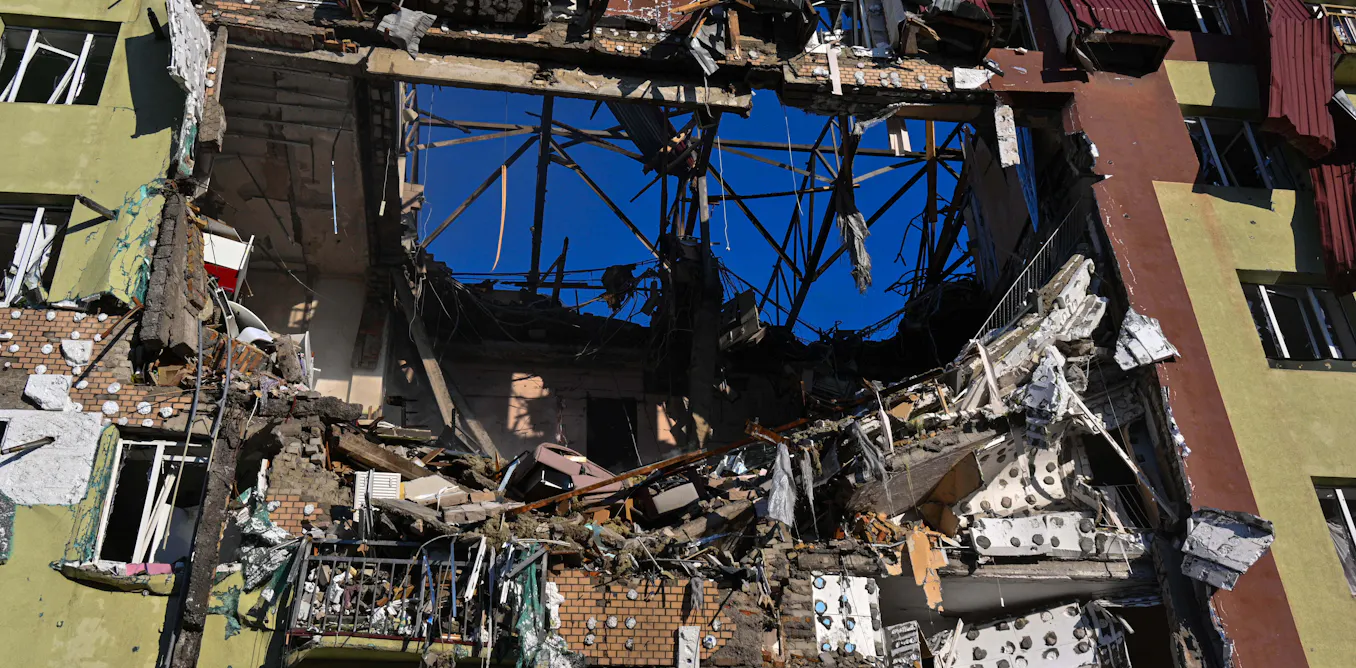
Behind every statistic is a community struggling to survive — a mayor trying to keep schools open under missile attacks; a municipal council managing hundreds of thousands of internally displaced persons with dwindling resources; a city engineer repairing the same water system for the third time after it was bombed yet again.
[…]
Local and regional authorities across Ukraine face these situations every day. And it is precisely because the challenges are so local — tied to specific communities and capacities — that the response must also be local.
Ukrainian decentralization reforms since 2014 have expanded the fiscal capacity of the country’s municipalities, enabling them to respond to the unprecedented shocks of war far more effectively than before. In fact, local budget revenues quintupled between 2014 and 2021.
Russia’s [full-scale] invasion disrupted these reforms.
[…]
The call to action by the congress asks local and regional authorities in Council of Europe member states to use “existing co-operation platforms and bilateral partnerships to offer practical support to their Ukrainian counterparts.”
It’s an appeal for cities that have solved difficult problems — managing mass displacement, rebuilding after disaster, reforming service delivery — to share what they know with Ukrainian cities doing the same under fire.
City-to-city partnerships are fundamentally different from top-down aid. They are peer relationships built on what scholars call horizontal assistance — the exchange of practical knowledge and structural social capital between cities navigating similar challenges.
[…]
History offers clear guidance on what works. Comparative analysis of post-war and post-disaster reconstruction experiences identifies local community engagement and bottom-up leadership as the single most consistent factor separating successful from failed reconstruction.
[…]
Canada has been here before. Beginning in 2010, the Federation of Canadian Municipalities (FCM), financed by the Canadian government through Global Affairs Canada, built exactly this kind of peer network in Ukraine through the Partnership for Local Economic Development and Democratic Governance.
The $19.5-million, six-year initiative worked directly with 16 Ukrainian cities to strengthen local democracy, support small and medium-sized businesses and advance decentralization.
FCM’s municipal experts worked alongside counterparts in cities like Lviv and Dnipro, co-publishing Ukraine’s first municipal guide to local economic development and helping local governments design collaborative regional projects. A key partner throughout was the Association of Ukrainian Cities, a key municipal advocacy organization.
That program ended, but the relationships it built did not. And the decentralization reforms it supported are now widely credited — by the congress’s call to action itself, the OECD and scholars of Ukrainian resilience — with giving Ukrainian local authorities the capacity to respond as effectively as they have to the shocks of war.
[…]