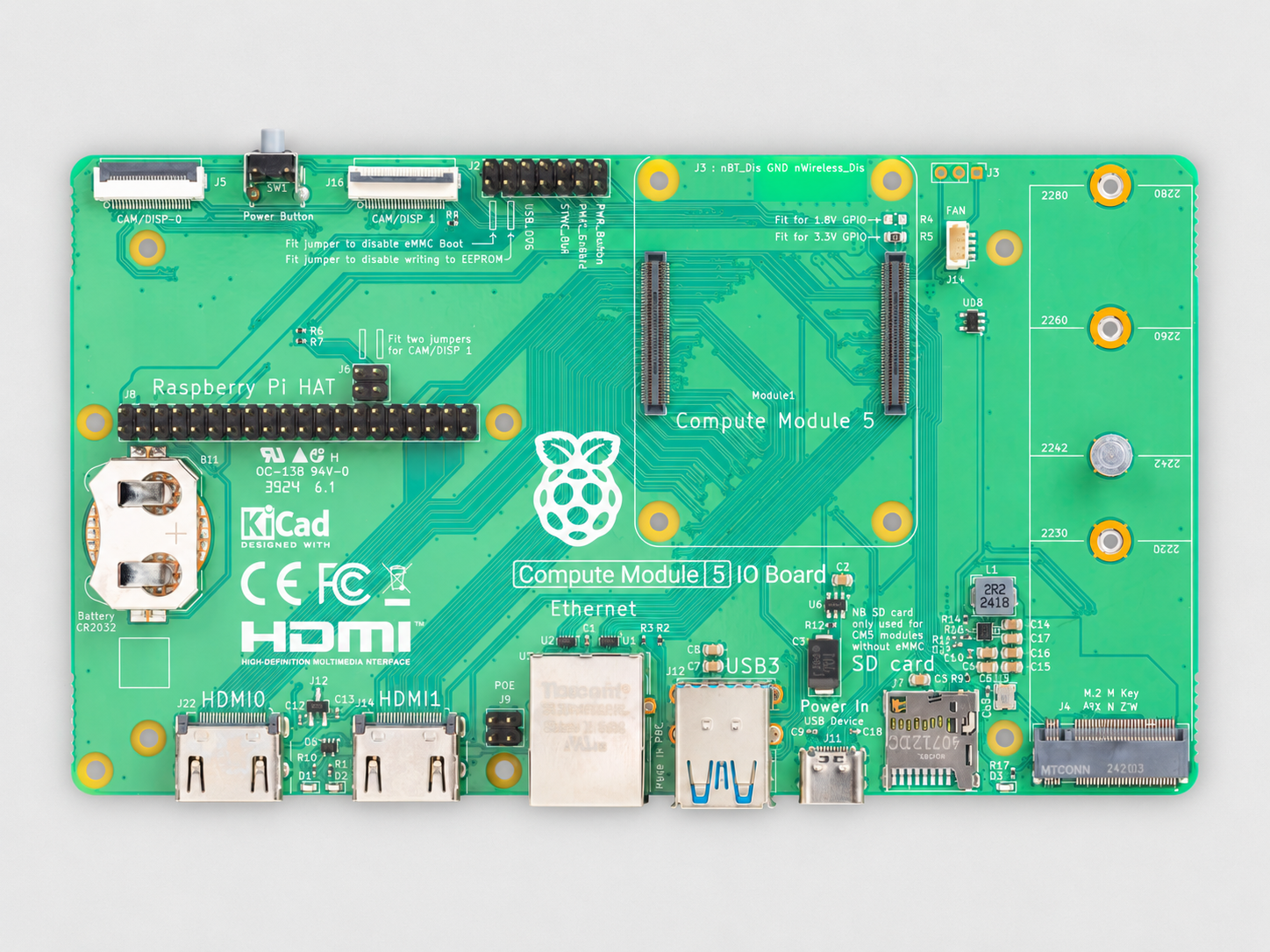
Raspberry Pi is actively preventing enthusiasts from upgrading soldered memory to a larger configuration even when the replacement chip is technically compatible. The company says the restriction is intended to discourage unofficial high-capacity resales.


The fact that it is economically viable to resolder different chips, is already showing it’s a illegitimate business model, imo…
Not a product, but a money grab
So hypothetically.
Let’s say a raw memory chip, is $2 $4 and $10 for a 4gb, 8gb, and 16gb raw chip.
Let’s say the RPi Compute module are $50, $70, and $100 for the 4gb, 8gb and 16gb versions. From smallest to largest that’s a $50 price increase for a $8 cost increase.
Is that an ‘illegitimate’ business model? Honest question I’m curious where you’re at.
I think so, yes. It bases the business on “money milking” by staggering SKUs to maximize profits. “Cheap” one that is mostly useless, just to upsell the others. “Mid” one that is just okay. And “expensive”, that isnt more expensive to make, but looks reasonable here to really milk the money. “Usual” dark patterns these days.
Per your hypothetical:
Say there is some r&d budget A, production and logistics costs B, and SKU component costs Ci. Since we’re capitalistic corpo aimed at line go up, there is also D% margins.
rough math, per unit:
((A + B) * sku_1 / N**2 + C + 2) * D = 50
((A + B) * sku_2 / N**2 + C + 4) * D = 70
((A + B) * sku_3 / N**2 + C + 10) * D = 100
sku1, sku2, sku3 = number of sku units
C - cost of all other components
N = number of units
D = 100% + margin%
Set D, A, B, C, N and you’ll see how they expect to sell their rpis, not based on “hey this is our proposal”, but based on “target this market, upsell this, and focus on selling this overpriced sku”.
But maybe they’re not evil, and they don’t want to tell you what to do, just a proposal and expected market. Let’s do a simpler situation. A per-unit equitable margin based business:
B - per unit logistics, prod costs (they are literally identical in every way except for ram chip) D < 100%, added margin
Oi. Margin of 900% (that’s some costly R&D) , but 3) is literally then broken. And then math does not math, with abstract bad numbers.
Let’s try more realistic numbers:
Now some data is missing for ram chip prices, or costs of components, but let’s just assume indeed BC + R1 = 53/M. I.e. they don’t purposely lose money on the shittiest sku. Ram prices are exponential. Say BC + R1 = 25. Which makes M around 200%. Wait, that makes 16G chip cost at least 120. Okay, about 2.5 times as expensive than the most expensive retail-amount chip I found on alibaba.
So math aint mathing, and money appears to be a floating imaginary point in petroleum integral support space.
Oh well, companies will be companies. At least when you buy a raspberry pi you definitely are not paying them to actually specifically reduce your capabilities, gaslight you without valid engineering explanations, and just continuing to try to extinguish an unending PR nightmare using your fancy SKU cash
In reality, their base tier SKU is likely a net money loss. Which is why they’re scared shitless somebody actually broke their dark pattern. The sales department is always right on what and how many should be sold!