I agree with you mostly but don’t agree in calling people “diseducated”, I think it removes too much personal agency. Undermining education and replacing it with religious devotion is most definitely a goal of fascist wealthy class but we aren’t there yet.
Public education doesn’t make someone mentally incompetent, so no need to infantilize them. This “hate, fear, and illiteracy” are all choices they’ve made to identify with.
No one is born MAGA, they choose it for themselves. Their lack of self-discipline and unable to delay gratification and propensity to choose the path of least resistance may be preyed upon by the system but they always have a choice.
Its very similar to the food system in this country, it’s all engineered to feel good and make you addicted and overconsume. You still have the choice to eat less and exercise more but it’s hard. Some people are also predisposed to falling into it, so I do think you make a good point even if I don’t fully agree
I appreciate your response, it’s well written and considerate.
I want to clarify that my use of the term diseducation is not primarily directed to public schools en masse, but rather the increasing role platforms like TikTok, television, and ‘alternative’ ‘sources’ of mis/disinformation play as a voice of authority in many areas of life. To me, disinformation and diseducation vary in that disinformation is intentionally misleading/false facts about a topic to form a particular stance such, whereas diseducation primarily affects a way of thinking or conducting “research” to yield more results over time. For example, I believe a religious take on something like creationism to be disinformation as it pertains to a single set of facts on a single topic, but I believe a religious framing of things like the origin of sin and human nature to be more diseducation as they affect an individual’s framework for understanding that branches beyond a particular topic. Probably not the best example; I had a long day at work
I may be misinterpreting you a bit still, but if I reframe diseducation as propaganda, then I completely agree with your point. And it also presents a challenge we will face in perpetuity in the future. The technological progress of the internet has had an enormous positive impact on humanity but also comes with an enormous human cost as the worst of us weaponize it to gain money and power.
The beauty of a library is most librarians love their job and are altruistically motivated, which can help when they spot someone regularly checking out sketchy stuff. For example, “The Prince” by Machiavelli being checked out by some 22 year old would elicit a small conversation at the counter about why he’s a bad person to learn from. Those types of small guiding interactions that encourage openness in thought don’t exist on the internet. The internet is also entertaining enough to find its way into influencing people who aren’t as likely to have a conversation like that at a library in the first place. There’s a whole list of small things like that which have previously made access to info more likely to be positive that simply aren’t in place on the internet, and it adds up a ton.


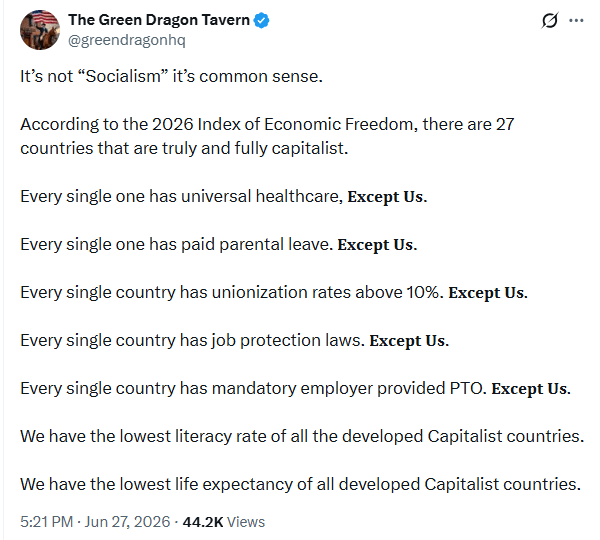
I agree with you mostly but don’t agree in calling people “diseducated”, I think it removes too much personal agency. Undermining education and replacing it with religious devotion is most definitely a goal of fascist wealthy class but we aren’t there yet.
Public education doesn’t make someone mentally incompetent, so no need to infantilize them. This “hate, fear, and illiteracy” are all choices they’ve made to identify with.
No one is born MAGA, they choose it for themselves. Their lack of self-discipline and unable to delay gratification and propensity to choose the path of least resistance may be preyed upon by the system but they always have a choice.
Its very similar to the food system in this country, it’s all engineered to feel good and make you addicted and overconsume. You still have the choice to eat less and exercise more but it’s hard. Some people are also predisposed to falling into it, so I do think you make a good point even if I don’t fully agree
I appreciate your response, it’s well written and considerate.
I want to clarify that my use of the term diseducation is not primarily directed to public schools en masse, but rather the increasing role platforms like TikTok, television, and ‘alternative’ ‘sources’ of mis/disinformation play as a voice of authority in many areas of life. To me, disinformation and diseducation vary in that disinformation is intentionally misleading/false facts about a topic to form a particular stance such, whereas diseducation primarily affects a way of thinking or conducting “research” to yield more results over time. For example, I believe a religious take on something like creationism to be disinformation as it pertains to a single set of facts on a single topic, but I believe a religious framing of things like the origin of sin and human nature to be more diseducation as they affect an individual’s framework for understanding that branches beyond a particular topic. Probably not the best example; I had a long day at work
I may be misinterpreting you a bit still, but if I reframe diseducation as propaganda, then I completely agree with your point. And it also presents a challenge we will face in perpetuity in the future. The technological progress of the internet has had an enormous positive impact on humanity but also comes with an enormous human cost as the worst of us weaponize it to gain money and power.
No doubt about that.
The beauty of a library is most librarians love their job and are altruistically motivated, which can help when they spot someone regularly checking out sketchy stuff. For example, “The Prince” by Machiavelli being checked out by some 22 year old would elicit a small conversation at the counter about why he’s a bad person to learn from. Those types of small guiding interactions that encourage openness in thought don’t exist on the internet. The internet is also entertaining enough to find its way into influencing people who aren’t as likely to have a conversation like that at a library in the first place. There’s a whole list of small things like that which have previously made access to info more likely to be positive that simply aren’t in place on the internet, and it adds up a ton.