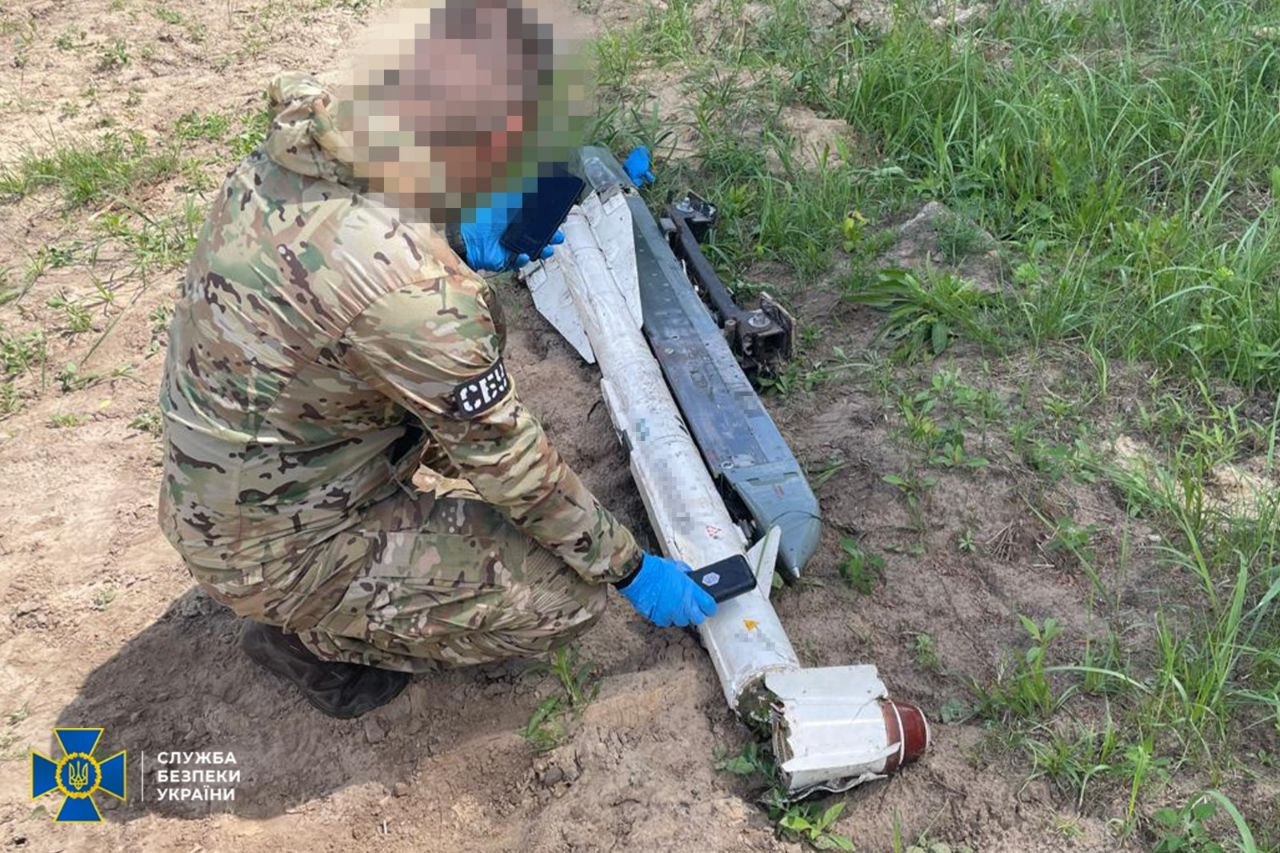
The Security Service found uranium in Geran-2 warheads striking Chernihiv Oblast and warned residents not to touch drone fragments, which can release radioactive dust.
Damaged or burned munitions pose the greatest danger, as they may release radioactive dust hazardous to people and the environment. A gamma reading of 24 microsieverts per hour is roughly 80 times background and enough to flag debris as hazardous to anyone in prolonged contact, though a single brief exposure at that level is far below the dose that causes acute harm.
So if this is just a “higher cancer levels years from now” kind of thing, why would Russia bother adding uranium? Isn’t uranium expensive?
Which is the leftover part that’s not useful for making nukes with.
Still radioactive, it’s basically hazardous waste… That weighs more than lead.
So you put it in munitions, and the same size projectile has more force, more stopping power.
So you get more damage out of each round, plus convenient disposal of toxic waste, plus the radiological contamination around your targets, which either ties up more resources or gives the people you’re shooting at cancer later. Or both! Or your own guys!
veritable carnival of excitement
But this is weird because drones arent projectiles in that sense. This is pretty much equivalent to putting very slightly radioactive lead ballast in a drone. All it is doing is slowing the drone down and reducing it’s range. Very odd.
Its a terrible way of doing that though, if you wanted to do that there are far lighter materials (i.e. you can carry more) and you’d disperse it as a powder from altitude.
Ah, I misunderstood. Its a missile ON another missile (the one way drone) for shooting down other drones that try and take it down and that missile has a usually tungsten fragment warhead which is being replaced with DU.
Still weird but not completely baffling in that case.
As I said, drones arent projectiles in that sense.
A uranium (or tungsten, or even jacketed lead) dart hitting a target straight on with a sharp point while going multiple times the speed of sound is armour penetrating. Just putting a heavy metal in a subsonic aircraft carrying high explosive does nothing to help it penetrate armour and likely would impede it.
Please re-read my comment, I only really focused on the radiation as I felt that more info was needed.
Since you seem to have actual experience with DU, I would be very interested in hearing if you ever checked how radioactive the DU munitions were?
I never said that DU wasn’t dangerous, it absolutely is, the toxicity is absolutely a large issue, as is its effect when hitting a target vehicle, absolutely devastating.
Damn, go and have a Snickers and relax, you are obviously angry at something, but it isn’t me you should direct your anger at.
This is just a random argument you decided to start two weeks after my comment.
It is obvious that you have other crap going on that is taking a toll, I do as well, but that doesn’t mean it is ok to start bashing people just because you have a shitty day.
If you want to argue facts about DU, then please, present some facts and skip the attitude.
This is depleted uranium, not uranium ore. It’s actual refined uranium, but not the right sort of uranium for use in fission reactions like nuclear power plants or bombs
Which is just extra mass in the munition. There’s no special property beyond being heavier per a certain volume that makes it crack armor better. Molten copper literally works better than DU to penetrate armor.
It’s all about disposal of radioactive waste. That’s really the answer. And that kills people on both sides of a conflict, years after the conflict is over. You like cancer? You want more?
Depleted uranium is favored for the penetrator because it is self-sharpening[36] and flammable.[32] On impact with a hard target, such as an armored vehicle, the tip of the projectile will be “mushroomed”,[37] while the back of the projectile is still a rigid solid. This leads to adiabatic shearing, and together with the spin of the projectile results in a shedding of the mushroomed plastic phase in such a way that it forms a new sharp tip. This shedding of the mushroomed tip improves penetration properties compared to the complete dispersal that takes place with tungsten penetrators,[38] therefore DU penetrators are 20% more effective than tungsten rounds.[39] The impact and subsequent release of heat energy causes it to ignite when in contact with oxygen.[32] When a DU penetrator reaches the interior of an armored vehicle, it catches fire, often igniting ammunition and fuel and possibly causing the vehicle to explode.[39] DU is used by the U.S. Army in 120 mm or 105 mm cannons employed on the M1 Abramstank.


So if this is just a “higher cancer levels years from now” kind of thing, why would Russia bother adding uranium? Isn’t uranium expensive?
According to the article, it’s depleted uranium.
Which is the leftover part that’s not useful for making nukes with.
Still radioactive, it’s basically hazardous waste… That weighs more than lead.
So you put it in munitions, and the same size projectile has more force, more stopping power. So you get more damage out of each round, plus convenient disposal of toxic waste, plus the radiological contamination around your targets, which either ties up more resources or gives the people you’re shooting at cancer later. Or both! Or your own guys! veritable carnival of excitement
But this is weird because drones arent projectiles in that sense. This is pretty much equivalent to putting very slightly radioactive lead ballast in a drone. All it is doing is slowing the drone down and reducing it’s range. Very odd.
If they’re not expecting the drones to return, this could be a ‘salting the earth’ tactic.
Its a terrible way of doing that though, if you wanted to do that there are far lighter materials (i.e. you can carry more) and you’d disperse it as a powder from altitude.
Like I said, its weird.
I’m not surprised it makes little sense. Remember this was/is a “Special military operation”. Emphasis on Special…
They’re putting it in the munitions on the drones
Ah, I misunderstood. Its a missile ON another missile (the one way drone) for shooting down other drones that try and take it down and that missile has a usually tungsten fragment warhead which is being replaced with DU.
Still weird but not completely baffling in that case.
The drone is a kamikaze drone. It delivers the warhead and destroys itself.
The uranium is armor piercing. That’s why they use it.
As I said, drones arent projectiles in that sense.
A uranium (or tungsten, or even jacketed lead) dart hitting a target straight on with a sharp point while going multiple times the speed of sound is armour penetrating. Just putting a heavy metal in a subsonic aircraft carrying high explosive does nothing to help it penetrate armour and likely would impede it.
The R-60M missile uses a continuous rod warhead – the DU is apparently included for “enhanced fragmentation”.
DU is far less radioactive than natural uranium.
EDIT:
According to the article, the uranium found gives off between 8 to 24 microsieverts (µSv) per hour.
Let’s take some real world examples and compare:
A transatlantic flight typically exposes you to 0.08 millisieverts (mSv), or 80 µSv.
Source: https://www.gov.uk/government/publications/ionising-radiation-dose-comparisons/ionising-radiation-dose-comparisons
This means that you would need to stay next to the piece of Uranium for 3,5 - 10 hours to get the same dose as one transatlantic flight.
Is it bad? Sure! Is it a crisis? Nah.
Cool. I routinely did 18+ hour long missions in iraq. Next to our munitions.
So fuck you.
You fucking apologist piece of shit
What?
Why am I an apologist for posting facts?
Please re-read my comment, I only really focused on the radiation as I felt that more info was needed.
Since you seem to have actual experience with DU, I would be very interested in hearing if you ever checked how radioactive the DU munitions were?
I never said that DU wasn’t dangerous, it absolutely is, the toxicity is absolutely a large issue, as is its effect when hitting a target vehicle, absolutely devastating.
“Oh oh, DU’s not that bad! I did math about bananas!”
Yes it fucking is. In every possible conceptual space. You goon. You know what you’re saying is wrong. Fuck you.
Damn, go and have a Snickers and relax, you are obviously angry at something, but it isn’t me you should direct your anger at.
This is just a random argument you decided to start two weeks after my comment.
It is obvious that you have other crap going on that is taking a toll, I do as well, but that doesn’t mean it is ok to start bashing people just because you have a shitty day.
If you want to argue facts about DU, then please, present some facts and skip the attitude.
Then we can have a decent discussion.
The west has been using depleted uranium for years, Israel loves it
yayyy
Enriched uranium is expensive. Uranium ore isn’tEdit: They did not use uranium ore
This is depleted uranium, not uranium ore. It’s actual refined uranium, but not the right sort of uranium for use in fission reactions like nuclear power plants or bombs
Alright, I stand corrected. I admittedly did not read the article before commenting, so I did not know they used depleted uranium.
Although my point about uranium ore being cheap is still technically correct 🤓
But it is radioactive. But given the mess around Chernobyl, drop in a bucket.
Thats just a side effect. The primary purpose of the uranium in the warhead is its armor piercing capabilities.
Which is just extra mass in the munition. There’s no special property beyond being heavier per a certain volume that makes it crack armor better. Molten copper literally works better than DU to penetrate armor.
It’s all about disposal of radioactive waste. That’s really the answer. And that kills people on both sides of a conflict, years after the conflict is over. You like cancer? You want more?
Wikipedia disagrees:
For armor piercing capabilities. And no it’s cheap because it’s radioactive and isn’t useful for very many things.
Lots of awful things about war. This is one in the endless list.