Jennifer and Dean Bye were just getting by before Hurricane Ida slammed into southern Louisiana in 2021. The couple own a house in a comfortable subdivision in Paulina, a town about an hour west of New Orleans, that they share with their three kids.
Then Ida turned everything upside down. The storm, one of the strongest to hit Louisiana on record, left a trail of devastation in its wake: More than 100 people died and economic losses totaled $75 billion.
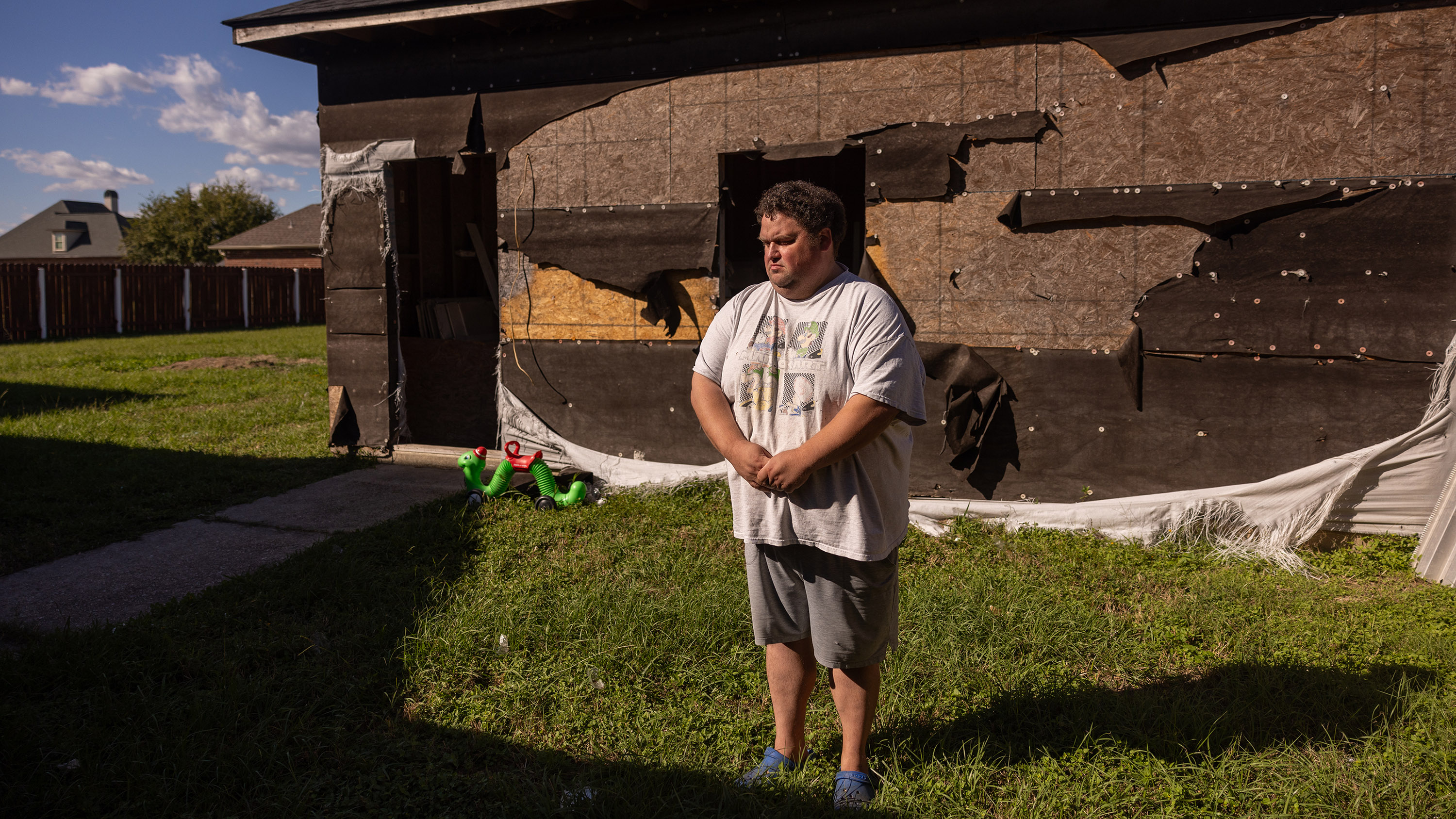
Four years later, the Byes are still living in a damaged house. Patches of tattered plywood siding are exposed to the elements. Inside, the windowsills are blackened with mildew. The kids play in a stripped living room, bare cement and grout underfoot. Fast-food wrappers and trash mingle with packing boxes and pulled-up carpet. The other houses in the neighborhood are neatly manicured, but the Byes’ house is still a wreck.
On paper, the family did everything right. They had homeowners insurance through an A+ rated, Better Business Bureau-accredited insurer called FedNat Insurance Company and kept up with their payments — some of the highest in the country.
What they didn’t account for was what might happen if their insurance company couldn’t make its payments.
In 2019, FedNat acquired Maison Insurance, a company with operations in Louisiana and Texas. It proceeded to become one of the biggest property insurers in Louisiana. But its fortunes took a turn less than a year later, when four hurricanes hit the South in the span of about two months, followed by a deadly winter storm that burst pipes and flooded homes in early 2021.
Later that year, as FedNat faced more than $100 million in net losses, a figure that included the claim filed by the Byes, the company abruptly announced it was dropping all of its policies outside of its home base of Florida. Some 13,500 homeowners in Louisiana were suddenly forced to scramble for insurance. Reorienting to focus exclusively on Florida, FedNat’s CEO said, would result “in a financially stronger company.”
Those assurances proved premature.
“By declaring bankruptcy, insurance companies can force policyowners and reinsurance companies to take a ‘haircut’ — meaning take less money than they were promised initially,” said Aldrich. “Some of those assets then are reabsorbed into a new company, some can be sold off, and some of the policies that are still productive, maybe they’ll keep those, like if they’re in very low-risk areas.”
People like the Byes, forced to navigate the legal process of fighting for an insurance payout while simultaneously trying to find another company willing to insure them, end up getting caught in the crosshairs.
As a point of interest, Berkshire Hathaway’s Insurance division made a huge profit last year as well as increasing profts by a large margin.
Insurance is a ponzi scheme that effects everyone negatively.
I’m beginning to think most insurance should be from the state. Health for sure, and with global warming shutting private insurers out of coastal regions like mine, what else are we to do? We already have government flood insurance where private won’t handle it.
I’m generally on board with that, and several states (including mine) are creating last-resort plans for homeowners who are unable to get private coverage. That said, this has to be accompanied with some kind of carrot-and-stick initiatives to move people out of high-risk areas. I don’t want my taxpayer dollars to subsidize insurance for beachfront properties or vacation homes in the mountains.
Don’t worry, citizens! That silly insurance company wouldn’t’ve paid you anyhow! 🤣🥲
Our government not going to bail this out? LOL, the victims aren’t rich enough!