

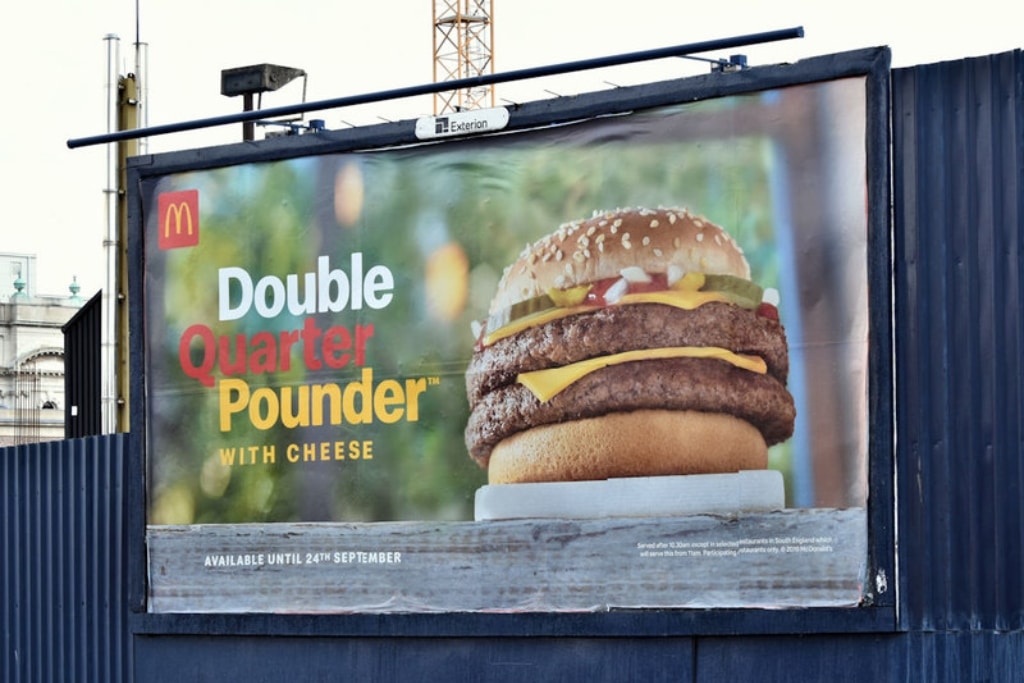
cross-posted from: https://mander.xyz/post/51503858
Over 50 cities, mostly European, have either restricted or tabled motions to introduce formal limitations on the advertisement of polluting products and services. Some – including several Dutch municipalities, Stockholm, Edinburgh and Sydney – have banned them altogether.
…
I would love them to ban advertising it in private spaces too.
Advertising doesn’t just sell products; it grants social licence, shaping what we see as normal and acceptable
I dont want to flip through the discounts at my local supermarket and see ads for meat. Normalizing that is a problem
In response the US will mandate twice as many ads for fossil fuel and meat, and call it a triumph of freedom.
Like with bribing oil companies not to build windmills Trump wil probably give the meat industry money not to develop meat free alternatives
Reminds me that Maddox guy, from ages ago, and his rant about veganism.
For every animal you don’t eat, I’m going to eat 10.
While meat can be sustainably produced in certain regions. That isn’t true in the Netherlands. They are absolutely filled to the brim with livestock with huge issues with water pollution and algal blooms as a result. Good on them for trying to reduce their meat consumption.
This is important to realise. They just hit the limits of local meat production - supply and demand isn’t working anymore, so they transition to a more economic and efficient source. This also does make it more environmentally friendly as a side effect, its more implicit in this case.
Any chance this goes national?
Good for them. Nobody needs to be reminded that McDonald’s exists or that you can only use the drive-thru at 3am when you can’t stop thinking of chicken nuggets.
Im all for banning big mac ads, but does this apply to delis and local butchers as well? That seens like an area where this ban could be more controversial compared to fast food advertising.
All meat consumption leads to the same kind of pollution, soil destruction and inefficient land use, with an even worse effect in a tiny country like the Netherlands. So they decided to do something about it.
All meat consumption leads to the same kind of pollution, soil destruction and inefficient land use.
This is absolutely not true. There is a vast difference between a US factory farm feeding cows nothing but corn and soy, and a Sami reindeer herder who is herding reindeer in the frozen tundra the same way his family has for thousands of years. Some land can’t be used for anything else than grazing, and while overgrazing is a thing, it’s not a universal constant. However the majority of meat on this earth is not sustainably farmed. That is absolutely true. But you can’t say no meat is sustainable.
But traditional herding cannot be used to produce enough meet for the high demand there is. Therefore it is necessary to lower the demand, and banning meat advertising could help with that.
Yes the Netherlands should cut way down. Other countries like Mongolia where the land is not suited for anything else, should be allowed to continue.
All meat involves torturing and killing for no reason.
If the Sami sell the meat to non-sami, you have the same problem
The sami do sell the meat to non-sami. Today and traditionally. Their traditional way of living involves trading reindeer meat and hide for grain and tools from the coastal farmers. And they are not the only herding culture who did it. You can take a look at the modern day maasai who trade beef for corn meal. Meat only is not that good of a diet so you have to trade if meat and hide is all you produce.
Meat?
Meat.
The meat industry is also responsible for a huge portion of global greenhouse gas emissions, and for nearly 60% of the food sector’s emissions. The global livestock industry alone is one of the world’s highest emitting sectors, estimated to be responsible for between 14-18% of total human-made greenhouse gas emissions.
Yes animal agriculture is a huge source of pollution.
… The global livestock industry alone is one of the world’s highest emitting sectors, estimated to be responsible for between 14-18% of total human-made greenhouse gas emissions …


